Sugar Talk
Sugar Talk

Invert sugar syrup: types, uses and functions explained
Invert sugar syrup is one of the most versatile pure sugar industrial ingredients used in food and beverage manufacturing. It is sweet, soluble, low viscosity and functionally useful in applications where manufacturers need more than sweetness alone.
Depending on the formulation, invert sugar syrup can help retain moisture, control crystallisation, improve texture, support fermentation, influence colour and flavour development, and improve the eating or drinking quality of finished products.
At Ragus, we produce full invert sugar syrup and partial invert sugar syrups, including golden syrup. Each is made by controlling the inversion of sucrose into glucose and fructose, but they perform differently because they contain different proportions of these sugars.
This guide explains what invert sugar is, how it is made, how full and partial inverts differ, and where invert sugar syrups are used in baking, confectionery, desserts, beverages and brewing.
What is invert sugar?
Invert sugar is made when sucrose is broken down into its two component sugars, glucose and fructose. Sucrose is a disaccharide, meaning it is made from two monosaccharides joined together. When sucrose is inverted, that bond is split, creating a syrup containing glucose and fructose.
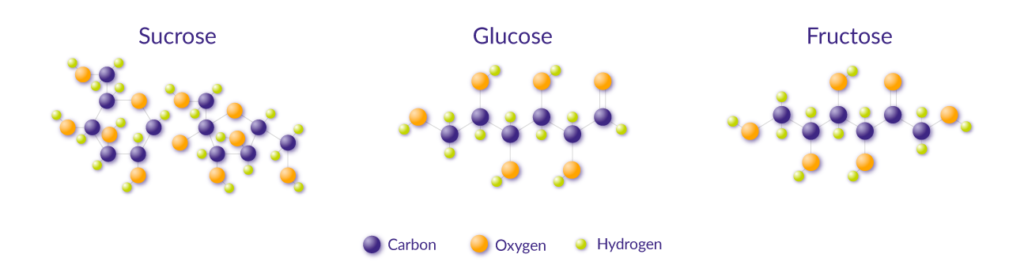
This process changes how the sugar behaves. Glucose and fructose are smaller molecules than sucrose, and they behave differently in solution. They affect sweetness, water activity, texture, viscosity, crystallisation and fermentation.
Invert sugar syrup is therefore not the same as liquid sugar. It is a functional syrup with properties that can be selected and adjusted according to the needs of the finished product.
Why is it called invert sugar?
The name comes from the way sucrose and invert sugar rotate plane-polarised light. Sucrose rotates light in one direction, while the mixture of glucose and fructose produced by inversion rotates it in the opposite direction. The optical rotation has been “inverted”, giving invert sugar its name.
For most food and beverage manufacturers, the practical point is more straightforward: inversion changes sucrose into a syrup with different functional characteristics.
What are the functional characteristics of invert sugar syrup?
Invert sugar syrup is used when a manufacturer needs sweetness, but also wants specific performance in the finished product or production process.
Sweetness
Invert sugar syrup has a high sweetness value because it contains fructose, which is sweeter than sucrose. Glucose is less sweet than sucrose, but the combination of glucose and fructose produces a syrup that can deliver strong sweetness at the same solids level.
This can be useful in soft drinks, syrups, desserts, icings and other applications where sweetness needs to be delivered evenly through a liquid or semi-liquid product.
Moisture retention
Invert sugar syrup is hygroscopic, meaning it attracts and holds water. In food manufacturing, this makes it a humectant. It helps retain moisture in finished products, supporting softness, texture and shelf life.
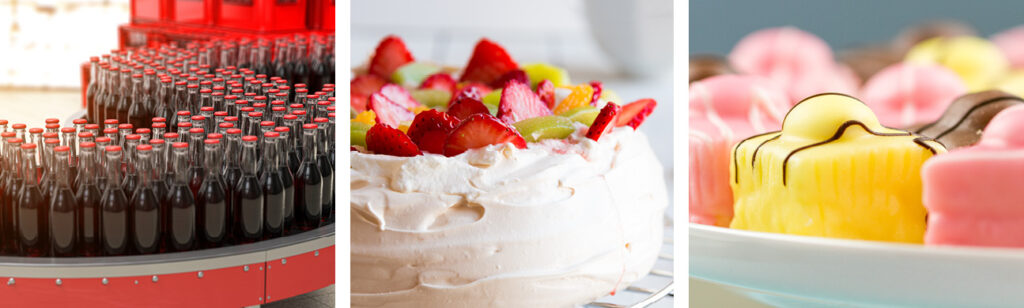
This is especially useful in cakes, biscuits, icings, fondants and baked goods where drying, staling or loss of softness can affect product quality.
Crystallisation control
Invert sugar syrup helps control sucrose crystallisation. Because glucose and fructose interfere with the way sucrose molecules align into crystals, invert syrup can help reduce graining and support smoother textures.
This is important in fondants, icings, confectionery fillings, caramels, syrups and some dessert applications where a gritty texture would be undesirable, impacting negatively on consumer experiences.
Solubility and low viscosity
Invert sugar syrup is highly soluble and relatively low viscosity compared with some other syrups. This makes it easy to mix, pump, dose and disperse through formulations.
In industrial production, this can support process efficiency as well as product quality.

Freezing point depression
Sugar affects the freezing behaviour of water. In frozen desserts, smaller sugar molecules such as glucose and fructose contribute to freezing point depression, reducing the amount of water that freezes at a given temperature.
In ice cream and sorbet-style products, this helps control ice crystal formation and supports a smoother, more scoopable texture.
Browning, colour and flavour development
Invert sugar contains reducing sugars, which can take part in the Maillard reaction during heating. This can support colour and flavour development in baked goods, syrups and confectionery, depending on the formulation and processing conditions.
In products such as golden syrup, controlled heating and processing time are also central to the final colour and flavour.
What does flavour attractant mean?
Invert sugar syrup is often described as a flavour attractant. In practical food manufacturing terms, this means it can help carry, balance and enhance the perception of flavour in the finished product. There are several reasons for this.
First, invert sugar syrup dissolves easily and distributes sweetness evenly through a formulation. Sweetness can lift and round other flavours, especially in products with fruit, caramel, malt, spice, cocoa or dairy notes.
Second, its humectant properties affect mouthfeel. A product that remains softer, moister or smoother often releases flavour differently during eating.
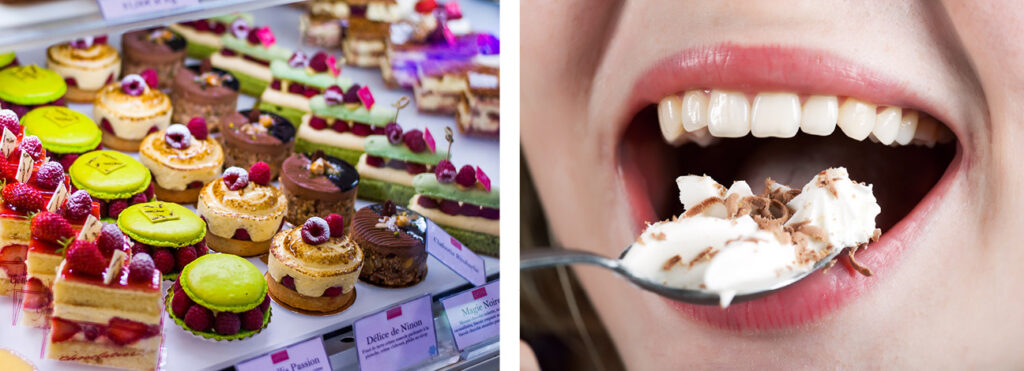
Third, glucose and fructose can contribute to browning and flavour development during heating. In baked products, confectionery and syrups, this can support deeper colour and more rounded cooked notes.
This does not mean invert sugar adds one fixed flavour of its own. It means it can support the way flavour is carried, perceived and developed in the finished product.
What is the difference between full and partial invert sugar syrup?
Ragus produces two types of invert sugar syrup: full invert sugar syrup and partial invert sugar syrup.
Full invert sugar syrup has a high proportion of inverted sugars and very little remaining sucrose. Ragus full invert typically contains 3.5–5.5% sucrose and 71–77% invert.
Partial invert sugar syrup contains more remaining sucrose and a lower proportion of invert. Ragus partial invert typically contains 32.5–35.5% sucrose and 42.5–45.5% invert.
This difference in composition changes how each syrup behaves.
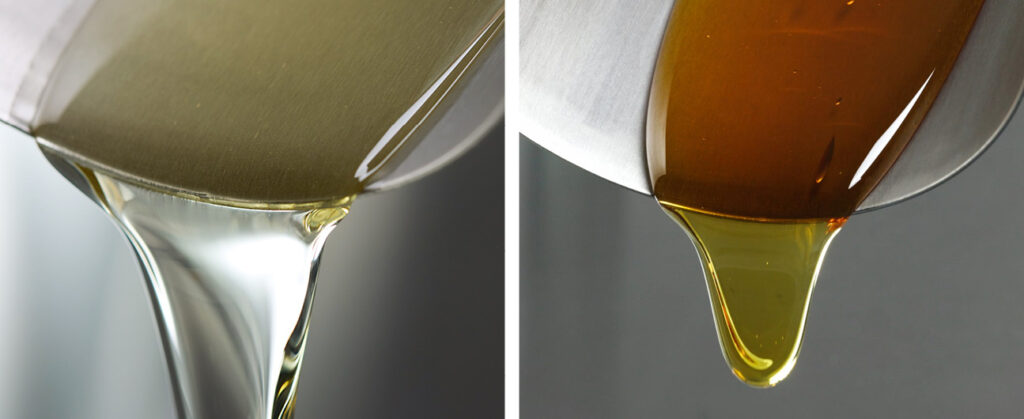
Full invert sugar syrup
Full invert sugar syrup is used where high sweetness, moisture retention, low crystallisation and fermentation performance are important.
It is particularly useful in applications where manufacturers want the functional properties of glucose and fructose without a high level of remaining sucrose.
Typical uses include:
- Baking.
- Icings.
- Fondants.
- Confectionery.
- Desserts.
- Soft drinks.
- Brewing and fermentation.
Partial invert sugar syrup
Partial invert sugar syrup contains both sucrose and invert sugars. This gives it a different balance of sweetness, body, flavour and processing performance.
Partial inverts are useful where some sucrose structure is still desirable, but the manufacturer also wants the benefits of inversion, including moisture retention, flavour support and controlled crystallisation.
Golden syrup is a special case of partial invert sugar syrup.
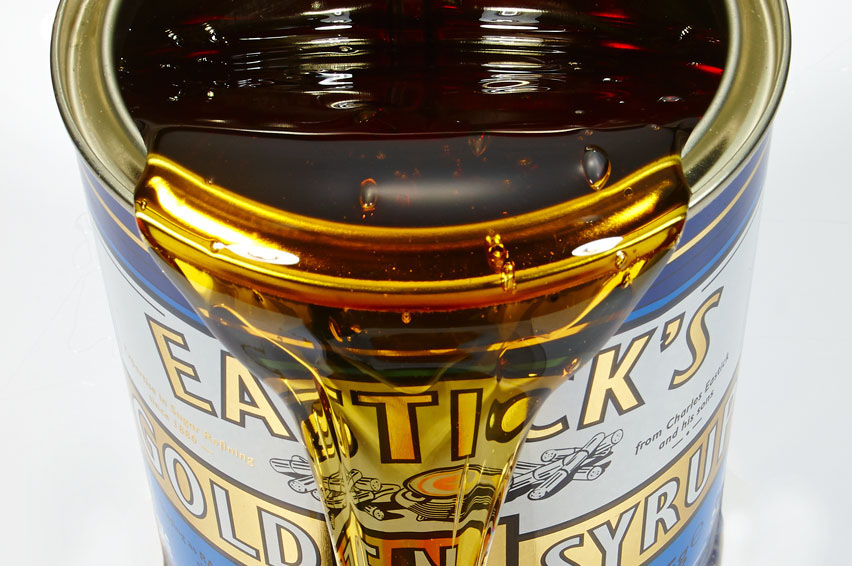
Why golden syrup is a partial invert sugar syrup
Invented by Ragus founder Charles Eastick in 1883, golden syrup is one of the best-known partial invert syrups. It contains a balance of sucrose, glucose and fructose, but also has its own distinctive colour, flavour and appearance.
Rather than being a lighter version of full invert syrup, golden syrup is specifically made and processed to deliver its characteristic golden colour, smooth texture and recognisable caramelised mellow flavour.
Golden syrup production involves a longer controlled process than a neutral white invert syrup. Time, heat and process conditions influence colour and flavour development. Controlled caramelisation gives golden syrup its familiar appearance and cooked sugar character.
This makes golden syrup both a functional ingredient and a flavour ingredient. It contributes sweetness, moisture retention and texture, while also adding colour and flavour to products such as cakes, biscuits, flapjacks, sauces, fillings, desserts and beverages.
How are invert sugar syrups made?
Invert sugar syrup is made by dissolving sucrose in water and controlling the conditions that split sucrose into glucose and fructose. This is usually achieved through a combination of heat, acidity and process control.
In industrial manufacture, the degree of inversion is carefully controlled. The manufacturer decides whether the target is a full invert or a partial invert, then manages the process to achieve the required sugar profile, solids, colour, flavour, viscosity and stability.
Once the required degree of inversion is reached, the syrup is finished to specification. This may include pH adjustment, filtration, concentration and quality checks before packing or delivery.
For golden syrup, the process is designed to create both functional performance and sensory character. The longer cooking process helps develop colour and flavour, giving golden syrup its distinctive identity.
How is invert sugar used in baking?
Invert sugar syrup is widely used in baking because it supports moisture retention, texture and shelf life.
In cakes, it helps retain softness by holding water in the crumb. This can reduce drying and help the product stay palatable for longer.
In biscuits and cookies, invert syrup can support chew, colour and flavour development. Depending on the formulation, it can help produce softer textures or contribute to the cooked colour associated with baked goods.
In low-fat or fat-free bakery products, humectancy can be particularly useful because these products can dry out more quickly. Invert sugar syrup helps compensate by improving moisture retention.
How is invert sugar used in icings and fondants?
Icings and fondants need smoothness, stability and controlled crystallisation. Invert sugar syrup can help prevent large sucrose crystals forming, which reduces graining and supports a smoother texture.
This is why invert sugar syrup is useful in fondant fillings, including soft confectionery centres and seasonal products such as filled eggs for Easter and other celebrations.
It can also help retain moisture, giving icings and fondants a softer bite and more consistent texture over shelf life.
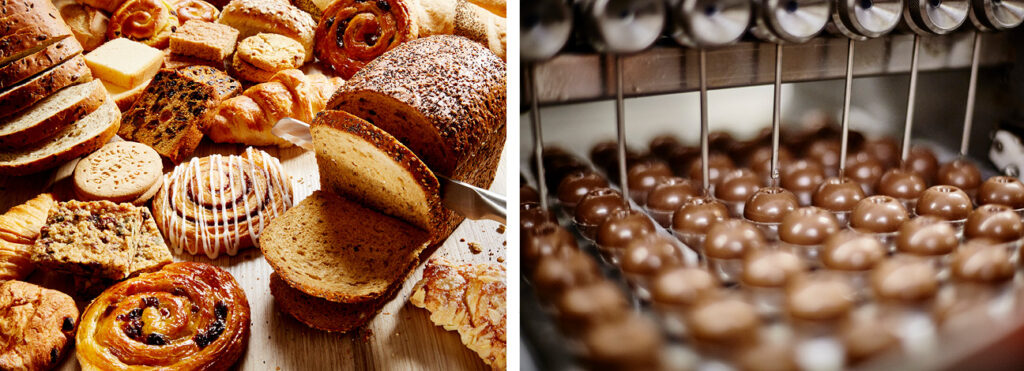
How is invert sugar used in confectionery and desserts?
In confectionery, invert sugar syrup is used to manage sweetness, texture, moisture and crystallisation.
In caramels and toffees, it can help control crystal formation and support a smooth chew. In fillings, it can help maintain softness and reduce drying. In syrups and dessert sauces, it delivers sweetness evenly and supports a smooth pour.
In frozen desserts such as ice cream, invert sugar syrup can help reduce freezing point and control ice crystal formation. This supports smoother texture and better scoopability.
The choice between full invert, partial invert, glucose syrup, golden syrup or another sugar ingredient depends on the finished product and the balance needed between sweetness, body, texture, flavour and processing performance.
How is invert sugar used in beverages?
In beverages, invert sugar syrup provides sweetness in a liquid form that is easy to dose and mix. It disperses readily and can support flavour balance in soft drinks, cordials, mixers and other beverage applications.
Because invert sugar syrup contains glucose and fructose, it can deliver sweetness differently from sucrose alone. This can be useful when developing drinks where mouthfeel, flavour lift and sweetness profile need to be controlled.
Golden syrup and darker partial inverts may also be used where colour and flavour are part of the product concept.
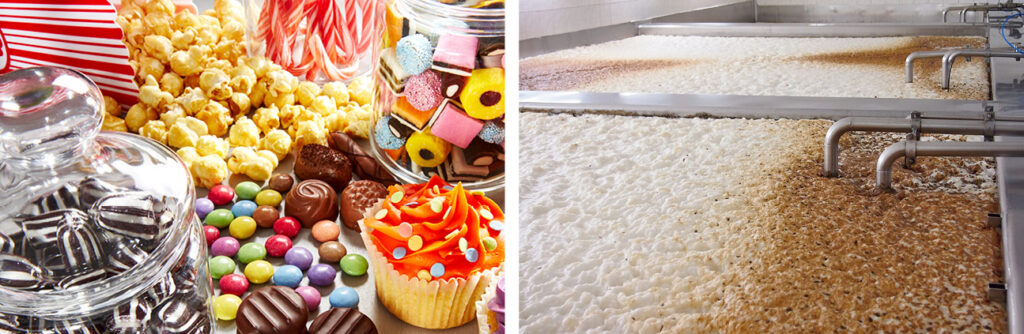
How is invert sugar used in brewing?
In brewing, invert sugar syrup provides fermentable sugars. Yeast can readily ferment glucose and fructose into alcohol, so the sweetness of the syrup does not remain in the finished beer, cider or perry in the same way it would in a non-fermented drink.
This makes invert sugar syrup useful when brewers want to support fermentation without adding residual sweetness.
The syrup can also be adapted with cane molasses, treacle or other sugar ingredients to support colour, flavour and mouthfeel. The final choice depends on the beer style, desired fermentation profile and the sensory character the brewer wants to achieve.
Choosing the right invert sugar syrup
Choosing between full invert, partial invert and golden syrup depends on what the ingredient needs to do.
A full invert may be the better choice where high sweetness, moisture retention, crystallisation control or fermentation performance are the main requirements.
A partial invert may be better where the product needs a balance of sucrose and invert sugars, or where body, flavour and controlled sweetness are important.
Golden syrup may be the right choice where the ingredient also needs to contribute colour, flavour and a recognisable cooked sugar profile.
The best choice depends on the application, processing conditions, pack format, shelf-life target and finished product specification.
FAQ’s
Invert sugar syrup is a liquid sugar ingredient made by breaking sucrose into glucose and fructose. This changes how the sugar behaves, making it useful for sweetness, moisture retention, texture, crystallisation control and fermentation.
No. Liquid sugar is usually sucrose dissolved in water. Invert sugar has been chemically changed so that some or most of the sucrose has been split into glucose and fructose.
Yes. Golden syrup is a partial invert sugar syrup. It contains sucrose, glucose and fructose, and is processed to give its characteristic golden colour and flavour.
Full invert contains a high level of glucose and fructose and very little remaining sucrose. Partial invert contains more remaining sucrose and a lower level of invert sugars. This affects sweetness, texture, crystallisation, flavour and applications.
Invert sugar contains fructose, which is sweeter than sucrose. Although it also contains glucose, which is less sweet than sucrose, the glucose-fructose mixture gives invert syrup a high sweetness value.
Invert sugar is used in baking because it helps retain moisture, improve texture, support colour development and extend shelf life. It is useful in cakes, biscuits, cookies and low-fat baked goods.
Invert sugar helps control crystallisation, which supports smoother textures in fondants, fillings, caramels and other confectionery products. It also helps retain moisture.
Invert sugar helps depress freezing point and control ice crystal formation. This supports smoother texture and better scoopability in frozen desserts.
Invert sugar provides fermentable glucose and fructose. Yeast can convert these sugars into alcohol, so the syrup can support fermentation without leaving the same residual sweetness in the finished beer, cider or perry.
The right syrup depends on the application. Full invert is often selected for high sweetness, humectancy, crystallisation control and fermentation. Partial invert and golden syrup are selected where remaining sucrose, colour, flavour and body are also important.
Choose the right invert sugar syrup for your application
Invert sugar syrup is a functional pure sugar ingredient used across baking, confectionery, desserts, soft drinks and brewing. Its value comes from the way glucose and fructose behave in formulation, helping manufacturers control sweetness, moisture, texture, crystallisation, fermentation, colour and flavour.
Ragus manufactures functional pure sugar ingredients for industrial food and beverage applications, supporting customers with product selection, reformulation, process performance, supply chain management and ESG requirements.
To discuss your sugar ingredient requirements, contact our Customer Services Team. For more sugar news and Ragus updates, keep browsing SUGARTALK and follow Ragus on LinkedIn.

Ibrahim Belo
With a primary responsibility for manufactured product quality control, Ibrahim works within our supplier chain, factory and production laboratory. He has a focus on continuous improvement, implementing and maintaining our technical and quality monitoring processes, ensuring standards and product specifications are met.