
Sugar Talk
Sugar Talk

Sugar market volatility: what buyers need to know for 2026/27
Food and beverage manufacturers need the right sugar ingredient to arrive when expected, in the agreed quantity and to the correct specification. That is harder to plan when crop conditions, energy costs and global supply routes are changing at the same time.
This article explains what current sugar market volatility could mean for price, availability and production planning during the 2026/27 sugar year. It also explains how Ragus monitors and manages these pressures so customers do not have to follow every market movement themselves.
Why headline sugar prices do not tell you what your sugar will cost
Global sugar markets provide public reference prices, with London and New York as the primary global commodity markets for sugar. The New York No. 11 tracks raw cane sugar, while London No. 5 tracks refined white sugar. The difference between them is known as the white premium. These terms help the industry understand the direction of the market, but they are not the price paid by a food or beverage manufacturer in their contract.
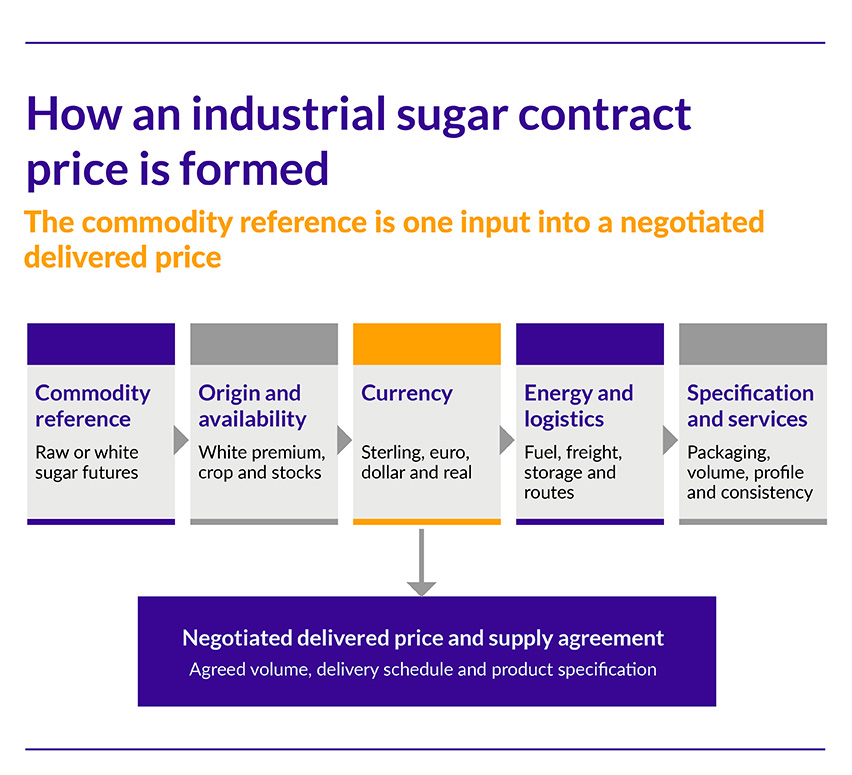
The contract between a sugar manufacturer and their customer will also reflect additional factors like the availability and origin of the sugar, exchange rates, energy, transport, packaging, the product specification, the volume required and the delivery schedule. These costs can move differently from the headline market price.
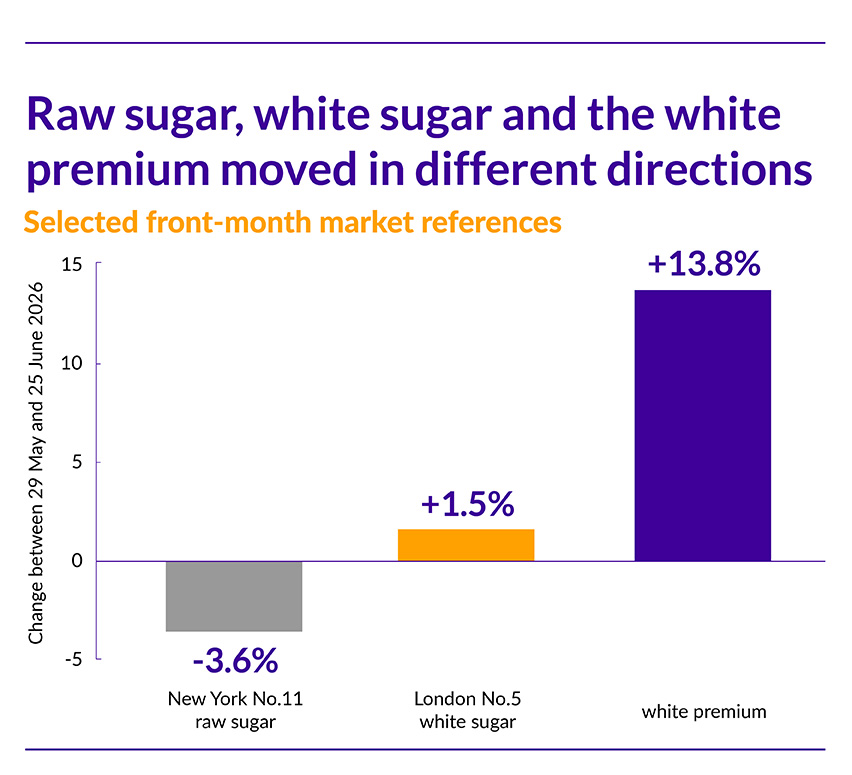
The chart below illustrates this point. During the period shown, the raw sugar reference prices on the New York market fell, the white sugar reference price on the London market rose slightly and the gap between them increased. What this means for sugar buyers is that a fall in raw sugar prices does not automatically produce the same reduction in the price of refined sugar or a manufactured sugar ingredient.
Weather is affecting beet and cane sugar in different ways
Nearly all European sugar is produced from sugar beet. Its final output depends on the area planted, summer growing conditions, the amount of sugar in the roots and whether the crop can be lifted from the fields efficiently. The European Commission expects EU production to be lower than in the previous campaign. In the UK, exceptional heat and very low rainfall during July increased pressure on the crop, while water storage remained well below its long-term average.
The sugarcane crops to make cane sugar are grown in tropical regions and face different risks. Too little rain can restrict growth, while excessive rain can delay harvesting and processing. Climate patterns such as El Niño can affect producing regions in different ways. In Brazil, the amount of cane used to make sugar can also change when ethanol becomes more or less attractive to producers.
These uncertainties are significant because buyers are agreeing future volumes before every crop result is known. A capable supplier therefore needs to assess availability across different origins and plan ahead for the ingredients its customers require.
Energy and global disruption affect the delivered product
Oil and gas prices affect farming, processing, manufacturing, packaging and transport. They can also influence whether cane is used for sugar or ethanol. Our earlier SUGARTALK article explains this connection in more detail.
Conflict and disruption on important shipping routes can increase freight costs, extend lead times and make some supply options less dependable. Recent World Bank analysis and UN Trade and Development reporting show how instability in the Middle East has affected energy and shipping markets. These pressures can remain in transport, packaging and supplier quotations even after headline oil prices fall.
Global sugar prices can change direction quickly
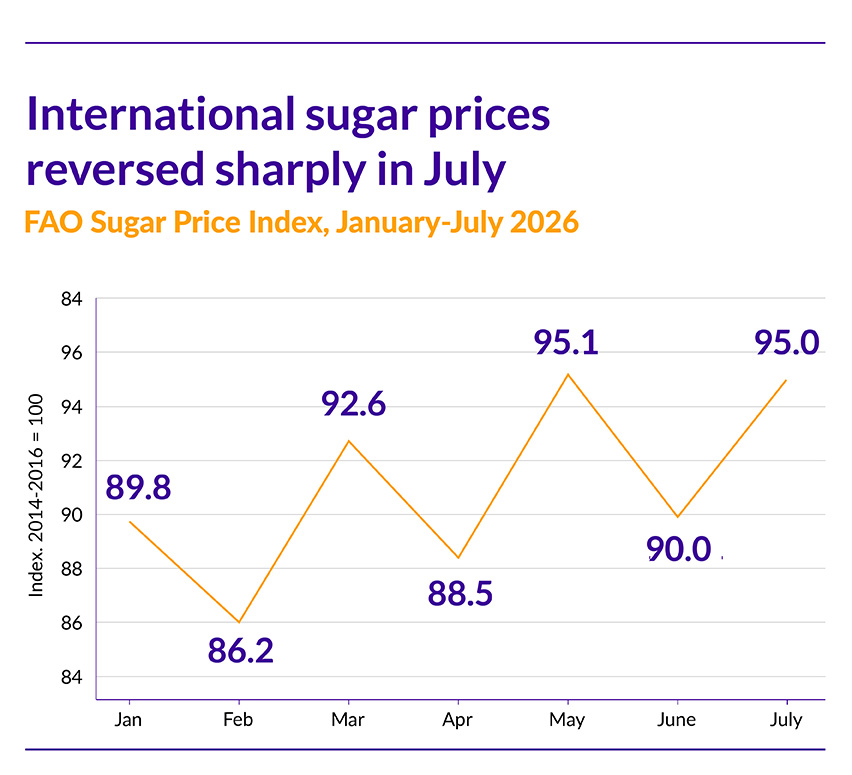
The FAO Sugar Price Index provides a broad measure of international sugar prices. It does not show the price of specific industrial sugar ingredients, but it helps to illustrate how quickly market expectations can change.
For example, the index reached 90.0 points in June and then rose 5.6% to 95.0 in July as EU weather, El Niño risk and Brazilian ethanol demand changed market expectations. The line in the chart below rises and falls several times over seven months. The change from June to July is the clearest recent example of how quickly the direction of international sugar prices can reverse.
This recent reversal does not mean that sugar prices will automatically rise, but it does show why annual negotiations must consider many factors, alongside the volatile commodity prices in the sugar markets.
The delivered price reflects the complete supply requirement
A market reference like the London and New York commodity market prices, or indexes like the FAO Sugar Price Index are only the starting point. The price and supply agreement must bring together the sugar available, currency, energy and delivery costs, and the product and service required by the customer, as the figure below shows.
Managing uncertainty is part of the Ragus service
Since 1928, Ragus has managed sugar supply through the economic shocks of the 1930s, the Second World War, industrial action, energy crises and more recent periods of global instability. That experience supports established supplier relationships, market monitoring, forward planning, inventory management, consistent manufacture to specification and on time delivery.
Ragus cannot remove volatility from the market, but it can reduce the uncertainty customers have to manage. Our objective is to help procurement and production teams secure the right sugar ingredients on time, in full and to specification, allowing them to concentrate on making their own products for end-consumers. Read more about how supplier capability supports continuity during disruption.
Plan 2026/27 sugar requirements with greater confidence
Ragus is discussing volumes, specifications and delivery schedules for the sugar year beginning 1 October. Buyers reviewing their 2026/27 requirements can speak to the Customer Services Team about the latest market position and available supply options.

Ragus manufactures functional pure sugar ingredients for industrial food and beverage applications, enhancing flavour, texture and appearance. A core part of our service is sugar sourcing and supply. To learn more about our pure sugar ingredients, contact our Customer Services Team. For more sugar news and Ragus updates, keep browsing SUGARTALK and follow Ragus on LinkedIn.

Ben Eastick
A board member and co-leader of the business, Ben is responsible for our marketing strategy and its execution by the agency team he leads and is the guardian of our corporate brand vision. He also manages key customers and distributors.
In 2005, he took on the role of globally sourcing our ‘speciality sugars’. With his background in laboratory product testing and following three decades of supplier visits, his expertise means we get high quality, consistent and reliable raw materials from ethical sources.


