
Sugar Talk
Sugar Talk

What 98 years of pure sugar expertise means for your next production challenge
A change to a familiar recipe can put years of product development back under scrutiny. The colour and flavour need to remain recognisable, the ingredient must perform on the production line, and the finished product still must meet the customer’s, and their consumers’, expectations. A disruption to raw material supply can bring similar questions, often with much less time to answer them.
Ragus has spent 98 years working through changing requirements just like these with our customers; food, beverage and pharmaceutical manufacturers. Founded in 1928 on Slough Trading Estate, where we still manufacture today, the business has built detailed knowledge of pure sugar ingredients and their applications. That experience helps us support our customers by judging which options are worth testing, understanding the implications for production and bringing the right expertise to a customer’s problem.
Applying sugar knowledge to a customer’s formulation
Sugar is a functional ingredient that contributes to the structure and behaviour of a product as well as its sweetness. A change that achieves the required flavour may also affect moisture retention or the way a mixture handles during manufacture. Understanding these relationships helps a brand’s development team decide what to investigate and what needs to be measured in trials.
In one of our customer’s projects, a manufacturer needed to remove an ingredient while retaining the colour, flavour, texture and mouthfeel of the finished product. The requirement was to make the change while preserving the experience consumers expected.
Our team developed alternative sugar-based solutions and assessed how each would affect manufacture and the finished product. The resulting formulation met the customer’s colour and flavour requirements and passed consumer taste tests.
Our team’s experience helped connect the choices being made in the laboratory with the practical demands of production. The customer’s team needed to understand how the raw materials and processing conditions would influence the result and proposed solution still had to be tested against their requirements.
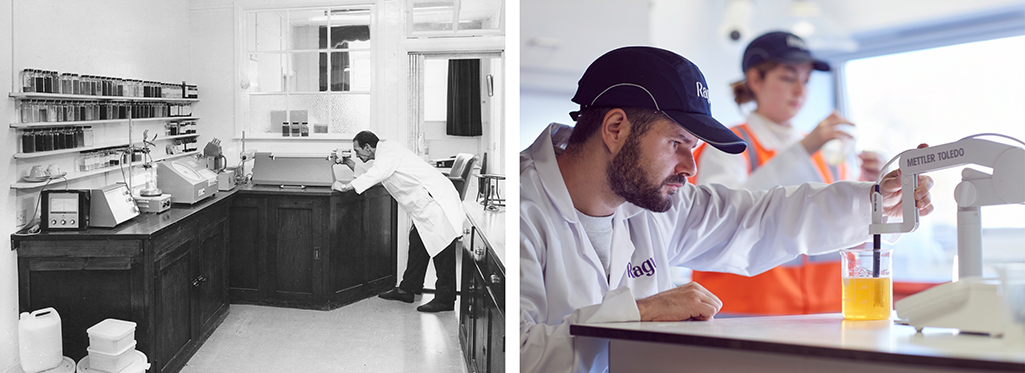
For a food technologist, this experience helps inform which options to investigate. For procurement and operations colleagues, it connects the formulation discussion with the practical requirements of supply and production. The work begins with understanding what you need to achieve.
Keeping production supplied when conditions change
Ragus has worked through periods when obtaining sugar and getting it to customers required a different approach. During the transport disruption of the 1978–1979 Winter of Discontent, the business used its own small tanker fleet to keep supplies moving to food producers. The lesson remains relevant: a supply agreement depends on the practical ability to deliver.
Today, we combine sourcing from multiple origins, the ability to work with cane and beet sugars, and flexible batch production. These capabilities give our team options to assess when availability changes. Established supplier relationships help us understand those options and the implications of using them.
Any alternative must be assessed against the specification and performance the customer needs. Manufacturing knowledge is important here because a sourcing decision has consequences for the ingredient we produce. Our article on supplier capability and continuity of sugar supply explains how those responsibilities fit together.
For a buyer, that brings technical and supply considerations into the same conversation. It supports decisions about how to maintain production while preserving the characteristics on which the finished product depends.
Connecting the laboratory with the factory and customer
Over 98 years, Ragus has developed a detailed understanding of how a customer’s requirements translate into a manufactured sugar ingredient. Working across sourcing, laboratory development and factory production has taught us how decisions at each stage affect the next, and ultimately how the ingredient performs in the customer’s product.
That understanding is essential when requirements change. A formulation discussion needs input from people who understand how it will be manufactured. A sourcing decision must take account of the specification the customer depends on. Colleagues who understand these connections can involve the right people and work through the implications together.
Much of this knowledge is passed on through everyday work. Experienced colleagues explain why a process is carried out in a particular way, show others what to look for and share what they have learnt from earlier projects. Formal training supports that practical learning.
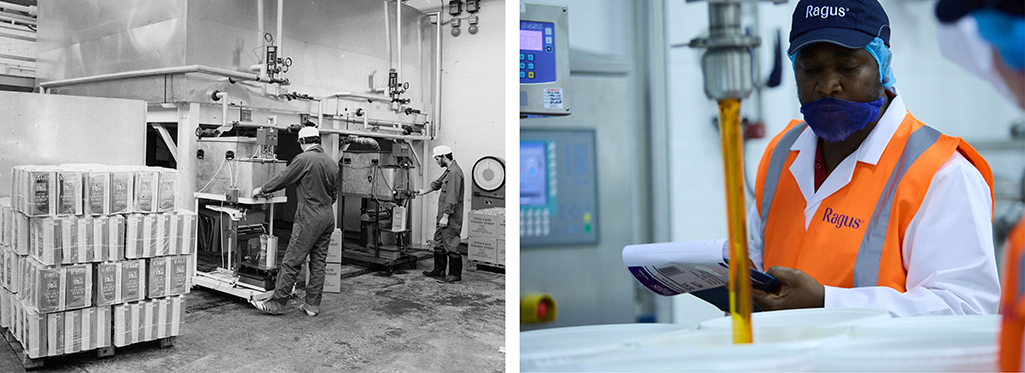
For customers, this means the knowledge behind an ingredient can continue to support it as responsibilities change within Ragus. Newer colleagues learn the reasoning behind established methods and develop the judgement to apply it to different requirements.
After 98 years, there is still more to learn. New applications and production methods give us further questions to investigate, adding to the experience available for the next project.
Putting established sourcing knowledge to work on new questions
Responsible sourcing has long been part of Ragus’s approach to sugar. Customers now need increasingly detailed evidence about sustainability and carbon, alongside information on quality and origin. Our knowledge of raw materials and supplier relationships provides a foundation for answering those questions.
A customer may need to establish which origin a certification covers or whether it applies to the raw material being supplied. Product carbon information needs similar care: the activities included in a calculation and the quality of the underlying data affect how a buyer can use the result.
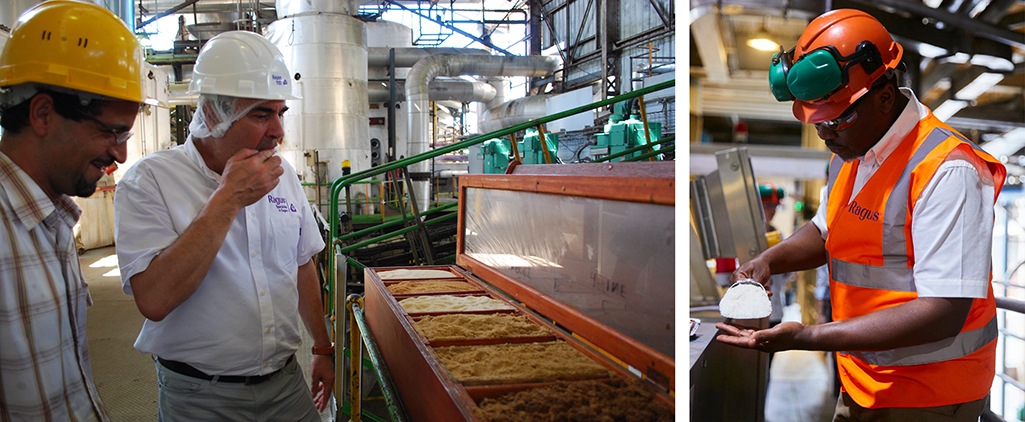
We are developing this sustainability capability across our team through practical supplier enquiries and work with experienced colleagues and external specialists. It involves learning how to assess evidence, identify gaps and recognise when further information is needed. Our deep understanding of how sugar is grown and processed helps us ask more useful questions of the sustainability data.
The customer benefit is information that can support a procurement or sustainability assessment, with its scope clearly explained. Our responsibility approach connects this work with the wider decisions involved in sourcing and manufacturing sugar ingredients.
Experience available for your next requirement
Our company history records repeated changes in what customers needed and how Ragus responded. Investment in manufacturing has allowed us to apply that accumulated knowledge as production volumes, applications and expectations have evolved.
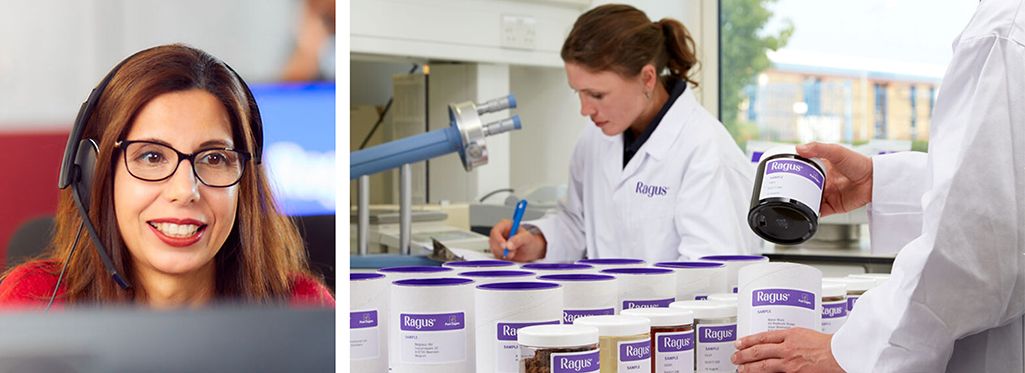
That is the practical value of 98 years for a customer today. You can draw on experience of developing sugar formulations and manufacturing them, supported by established supply relationships. When a requirement changes, we can consider it in the context of the product you make and the way your business operates.
As we move towards our centenary, the work continues with the next formulation, production question or sourcing enquiry. We start by understanding what you need to achieve, then bring together the people and capabilities to help you work through it.
Ragus manufactures functional pure sugar ingredients for industrial food and beverage applications. To discuss your formulation or supply requirements, contact our Customer Services Team.

Ben Eastick
A board member and co-leader of the business, Ben is responsible for our marketing strategy and its execution by the agency team he leads and is the guardian of our corporate brand vision. He also manages key customers and distributors.
In 2005, he took on the role of globally sourcing our ‘speciality sugars’. With his background in laboratory product testing and following three decades of supplier visits, his expertise means we get high quality, consistent and reliable raw materials from ethical sources.


